If you have ever searched for “digital signature how to sign a pdf”, you already know the problem: signing a PDF should be simple, but many e-signature platforms make it feel expensive, overloaded, or confusing.
Most people do not need a full enterprise contract platform. They need a clean way to upload a document, add signature fields, send it to recipients, and download the signed PDF.
In this guide, we compare five popular PDF signing sites: Sign PDF Cloud, DocuSign, Adobe Acrobat Sign, Dropbox Sign, and PandaDoc. We will look at what each tool does well, where it may be too much, and why Sign PDF Cloud is the best option for users who want simple, affordable, PDF-first signing.
Quick Comparison
| Platform | Best For | Main Strength | Possible Drawback |
|---|---|---|---|
| Sign PDF Cloud | Small teams, freelancers, document workflows | Simple PDF templates, signing links, reusable workflows | Newer platform |
| DocuSign | Large companies | Enterprise e-signature features and integrations | Can feel expensive or complex |
| Adobe Acrobat Sign | Adobe/PDF-heavy teams | Strong PDF tools and Adobe ecosystem | More than some users need |
| Dropbox Sign | Dropbox users and teams | Clean e-sign workflow and integrations | Pricing/features may depend on plan |
| PandaDoc | Sales proposals and quotes | Proposal creation, tracking, content tools | Can be too sales-focused for basic PDF signing |
1. Sign PDF Cloud
Best for: Users who want a simple PDF signing workflow without enterprise clutter.
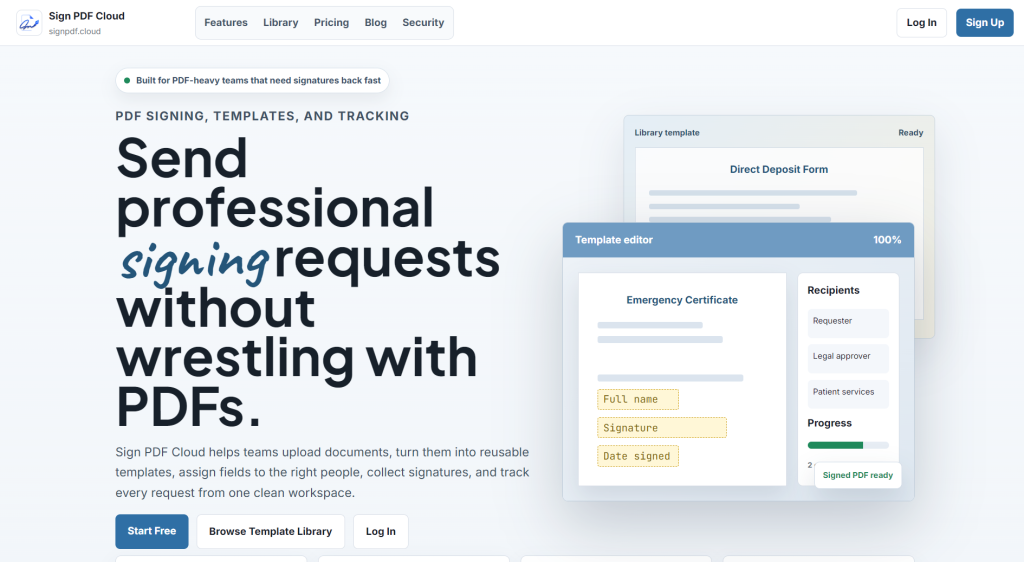
Sign PDF Cloud is built around the core workflow most people actually need:
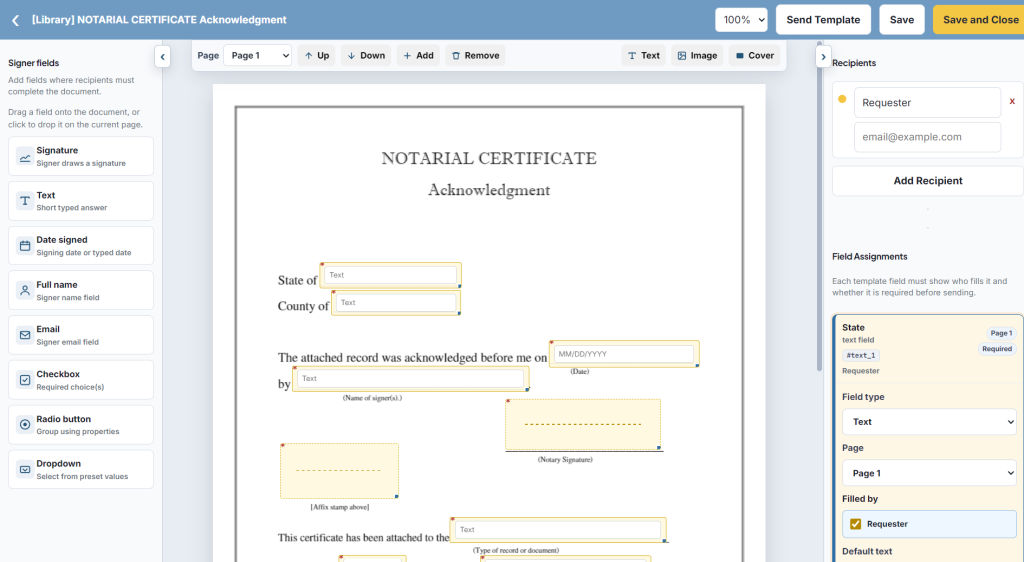
- Upload a PDF or supported document to add signature to pdf
- Add signature, text, date, checkbox, and other fields
- Assign recipients
- Send a secure signing link
- Track the request
- Download the completed signed PDF
This makes it especially useful for contracts, consent forms, HR paperwork, rental agreements, client intake forms, and other everyday business documents.
Unlike heavier tools, Sign PDF Cloud focuses on making the signing process fast and practical. You can create reusable templates, send envelopes, manage recipients, and keep your workflow organized from one dashboard.
For anyone searching doc e sign or trying to understand digital signature how to sign a pdf, Sign PDF Cloud gives the shortest path from “I have a document” to “this document is signed.”
2. DocuSign
Best for: Enterprise companies with complex agreement workflows.
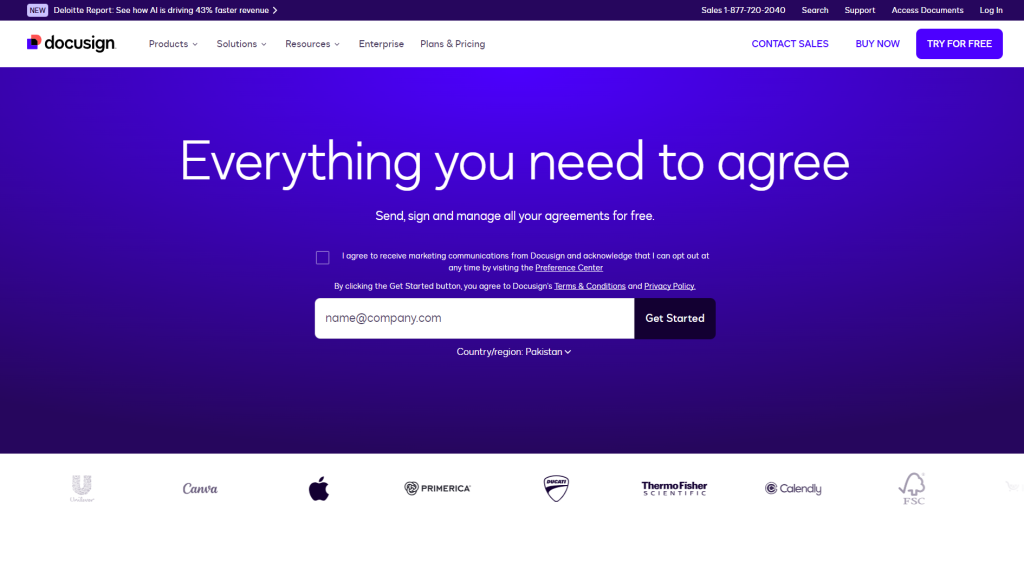
DocuSign is one of the most recognized names in e-signature software. It offers templates, integrations, AI-assisted workflows, web forms, bulk sending, and enterprise-level agreement management.
It is powerful, but that power can be more than a small business needs. DocuSign’s own pricing page lists envelope limits on some plans, such as 5 envelopes/month on Personal and 100 envelopes/user/year on Standard and Business Pro plans.
If your company needs a large agreement platform, DocuSign is worth considering. But if you just want to sign PDFs online quickly, it may feel heavier than necessary.
3. Adobe Acrobat Sign
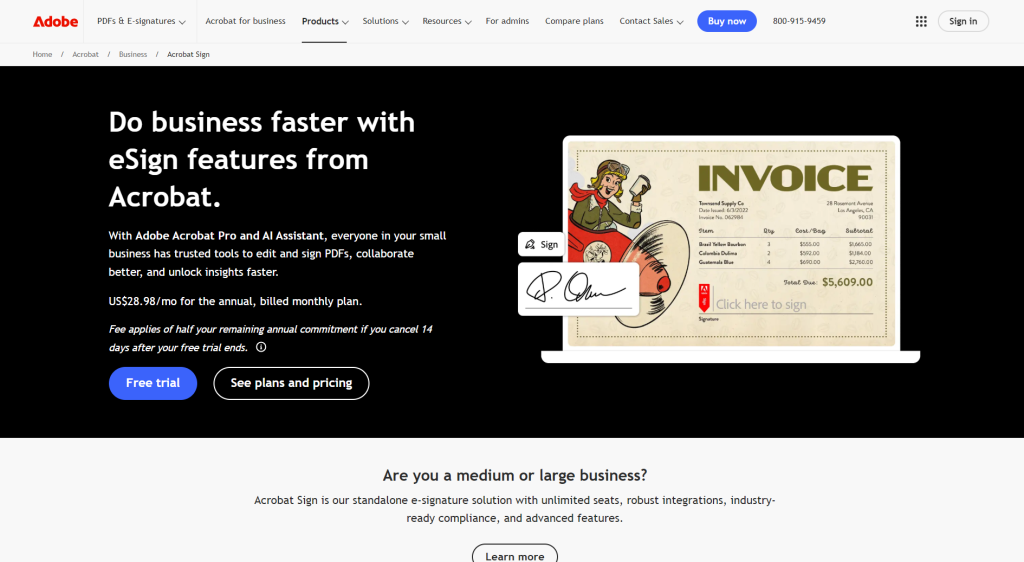
Best for: Teams already using Adobe Acrobat and PDF tools.
Adobe Acrobat Sign is a strong option for businesses that already live inside the Adobe ecosystem. Adobe combines PDF editing, signing, collaboration, and business features into one environment. Adobe also promotes Acrobat Sign for medium and large businesses with integrations and compliance-focused features.
The advantage is clear: Adobe understands PDFs deeply. The downside is that many users only need signing, not a full Adobe document suite.
If you already pay for Adobe tools, Acrobat Sign can make sense. If you want a lightweight signing workflow, Sign PDF Cloud is easier to approach.
4. Dropbox Sign
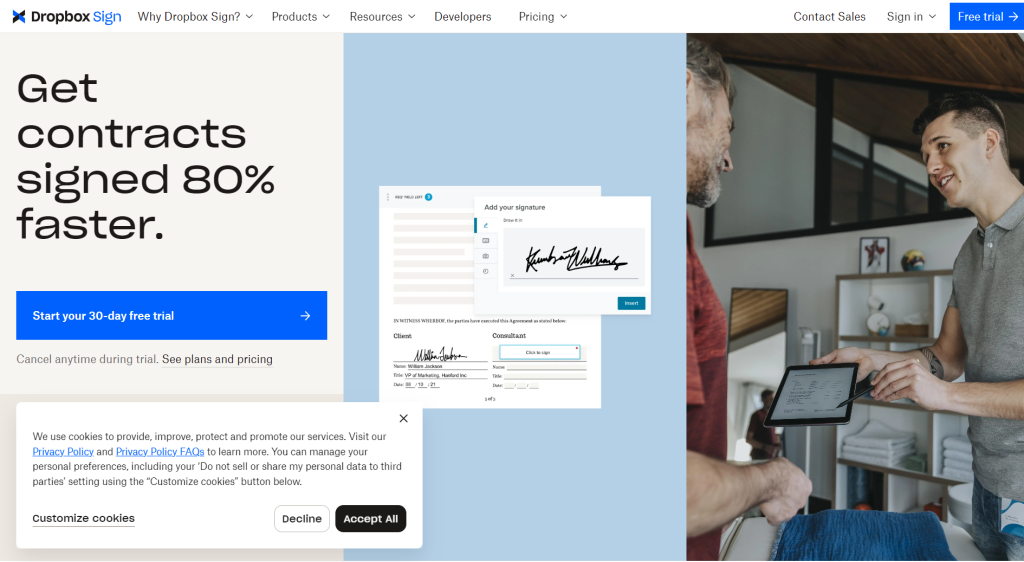
Best for: Dropbox users who want e-signatures inside an existing file workflow.
Dropbox Sign, formerly HelloSign, is known for a clean e-signature experience. Its pricing page highlights unlimited signature requests on paid plans, audit trails, reminders, templates, branding, and integrations with tools like Dropbox, Google, and Microsoft.
Dropbox Sign is a solid choice if your team already uses Dropbox heavily. However, if your main workflow is preparing PDF templates and sending signing requests, you may not need the larger Dropbox ecosystem around it.
Sign PDF Cloud keeps the focus on the document signing workflow itself.
5. PandaDoc
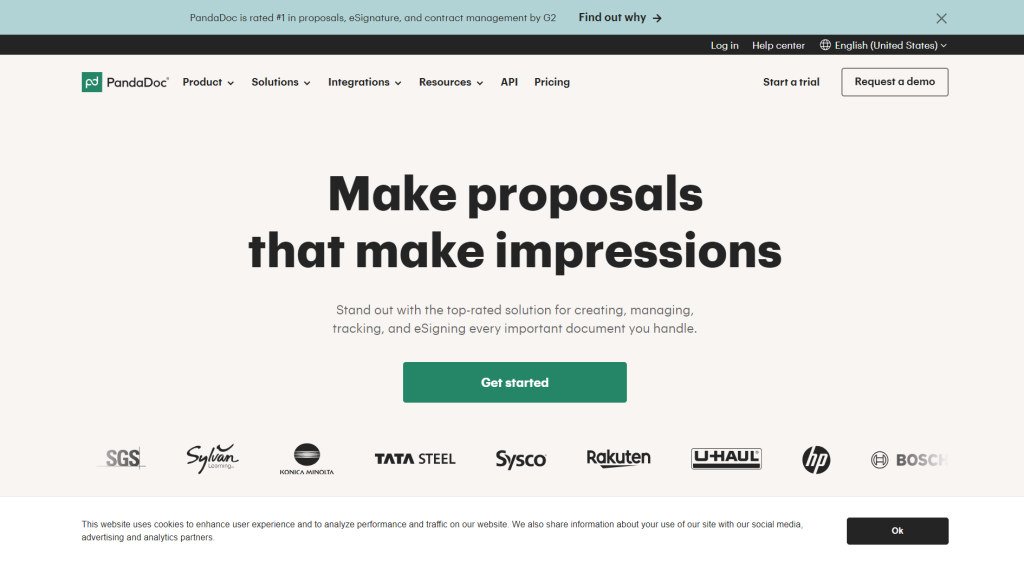
Best for: Sales teams creating proposals, quotes, and business documents.
PandaDoc is more than an e-signature tool. It includes document creation, proposal workflows, content libraries, tracking, comments, CRM integrations, and sales-focused features. Its pricing page includes a free tier and paid plans for more advanced document workflows.
This is excellent if you are building proposals from scratch. But for users who already have PDFs and simply need them signed, PandaDoc may feel broader than needed.
If your workflow starts with an existing PDF, Sign PDF Cloud is the more direct option.
Why Sign PDF Cloud Is the Best Choice for PDF Signing
The best tool is not always the biggest tool. The best tool is the one that fits the job.
Sign PDF Cloud is best when you want:
- A simple PDF-first signing workflow
- Reusable templates
- Drag-and-drop signer fields
- Secure recipient signing links
- Completed signed PDF downloads
- A clean dashboard for templates and sent documents
- Less complexity than enterprise platforms
- A practical alternative to printing, scanning, and emailing files back and forth
For small businesses, freelancers, agencies, landlords, consultants, HR teams, and service providers, this is usually exactly what is needed.
Final Verdict
DocuSign is powerful. Adobe Acrobat Sign is strong for Adobe users. Dropbox Sign is polished. PandaDoc is great for sales documents.
But if your main goal is simple, reliable PDF signing, Sign PDF Cloud is the best choice.
It gives you the tools you need to upload, prepare, send, sign, and track documents without burying the workflow under features you may never use.
Start here:
https://signpdf.cloud